








How PGA of America and Trackman are building the next generation of golf coaches
Today’s coaches need to understand the data, interpret what it means and communicate it in a way that helps every player improve — from first-time golfers to tour professionals.
 Trackman Editorial Team
Every golf coach starts somewhere. For some, the path leads to building a business. For others, it means introducing juniors to the game or helping elite players find the smallest margins of improvement.
Those paths may look very different, but they begin with the same foundation: education.
That foundation has considerable reach. PGA of America comprises more than 30,000 PGA of America Golf Professionals worldwide and develops future members through two primary pathways: the PGA Professional Golf Management Associate Program and the PGA Golf Management University Program, offered at 16 accredited universities nationwide. Continuing education also helps existing members develop throughout their careers.
Trackman adds another layer to that foundation, giving coaches objective data they can use to understand performance, measure improvement and communicate more effectively. Together, education and technology help coaches serve every level of the game — from beginners and juniors to business owners and tour professionals.
Technology is increasingly part of that education. But learning to coach with Trackman is not simply about knowing what the numbers mean. It is about understanding which numbers matter, identifying why they are changing and translating that information into language each golfer can understand.
Education that evolves with the game
Since becoming a PGA Member almost 30 years ago, Eric Hogge has watched the PGA education continually adapt to changes in the profession. Today, as a PGA of America Senior Faculty Member, he helps educate the next generation of coaches.
“Going through the education, it's obviously gone through a continual evolution,” he says. “I became a PGA member in 1998, in the old golf professional training program. So, we've gone through PGA 1.0, 2.0, 3.0, 3.1 — it continues to evolve.”
One of the clearest signs of that evolution is a more specialized approach to education. Today, aspiring PGA Professionals can pursue career paths aligned with different roles across the industry.
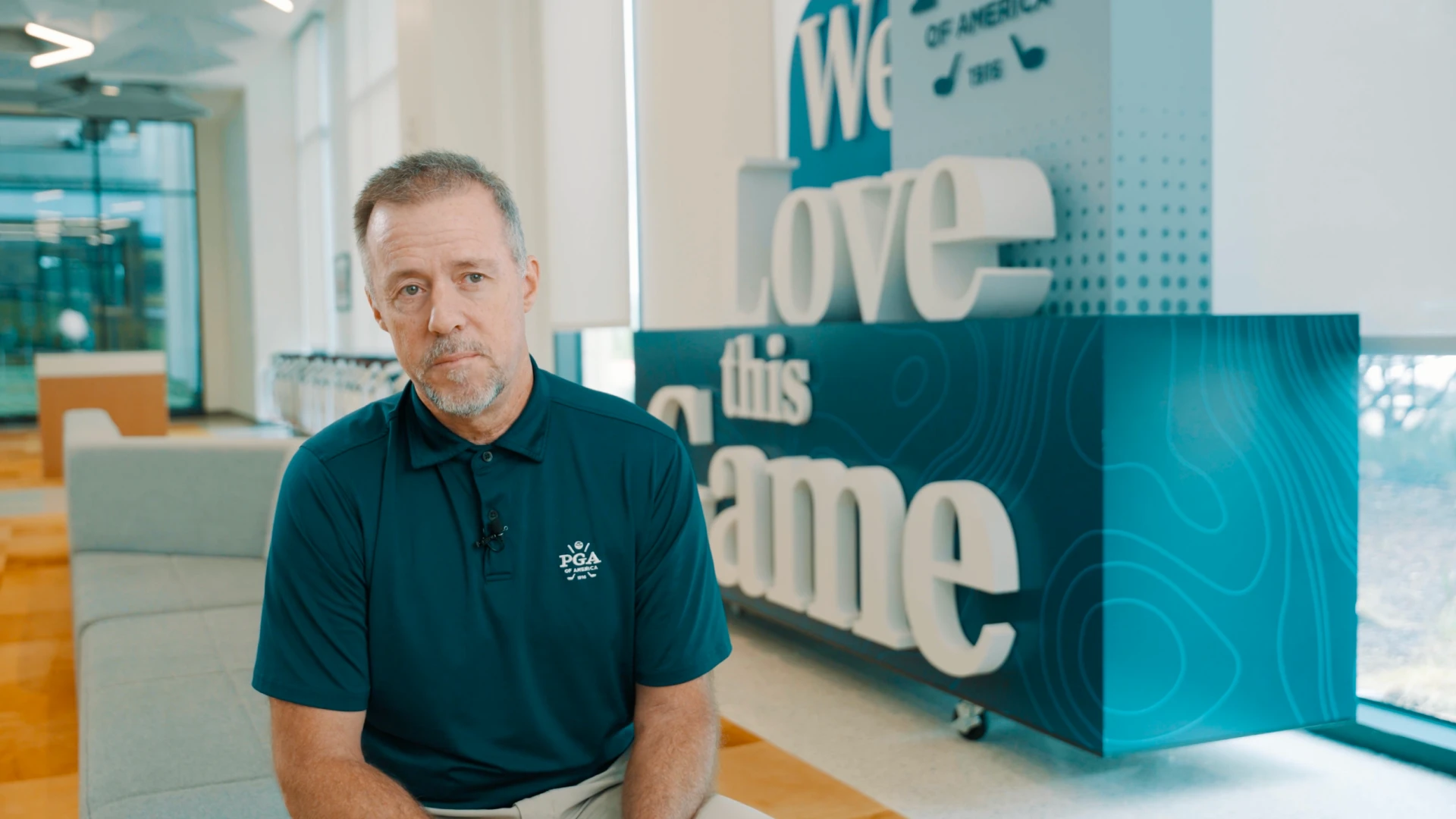
Tim Cusick, Head Coach at the PGA of America Coaching Center, says this reflects the increasingly varied opportunities available within the profession.
“Nowadays, there’s a lot more specializing. And that’s where the PGA of America education has really taken a page from. You have golf operations. You have teaching and coaching. And then you have executive management.” Technology has evolved alongside that education. When Cusick encountered Trackman while teaching in Europe earlier in his career, he found that it validated what he could see with the naked eye while shedding light on what he could not.
“Trackman is an incredible piece of technology. It proves what I see with my eyes and know from experience, and then some,” he says. “It confirms what I see, but it also helps me understand other things that I’m not seeing.”
Hogge’s first experience with Trackman came not long after 2005. As someone who describes himself as a quantitative thinker, having objective information immediately changed the way he understood the golf swing and ball flight.
To him, one of the most valuable applications is baselining. Capturing a player’s numbers and video at the start creates an objective reference point for measuring what changes over time.
That can make improvement visible even when it has not yet appeared on the scorecard. A player might shoot the same score on consecutive days and feel as though nothing has changed. But if their speed or angle of descent has improved, the coach can demonstrate that progress and keep the player motivated.
The challenge for a developing coach is learning to move beyond simply identifying a number. First, they must understand what it means. Then they must know how to use it to help the golfer in front of them — whatever their level might be.
That last part is crucial. As Cusick says, a coach may be working with highly scientific technology, but that does not mean every lesson should sound scientific.
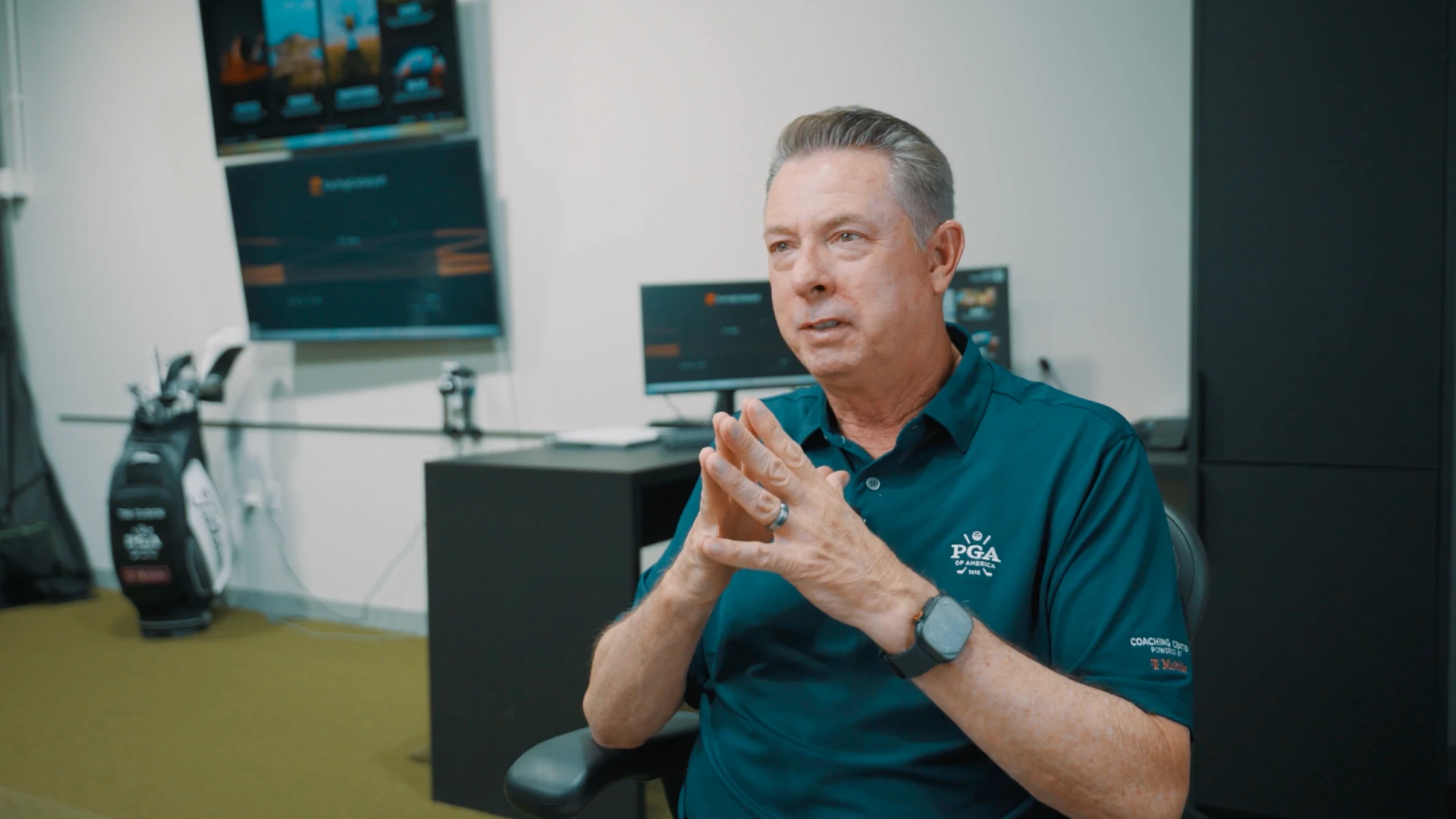
"A coach has to talk at the level of their student — they can't talk like a scientist if they have someone who’s having their very first golf lesson,” says Cusick. “They've got to understand their customer, understand their skill and knowledge level, and be able to talk to them.”
The principle is the same at every level: understand the information, then make it useful to the individual.
Turning coaching education into a business
For PGA of America Member Jonathan Buchanan, the PGA education and coaching experience became the foundation for a different kind of career.
Buchanan is the founder and CEO of City Golf Club, which has grown to three indoor golf locations since opening its first facility in Dallas in 2018. The idea came from seeing how difficult it could be for people in urban areas to access the game.
“I saw the struggles that people were going through in urban areas to have access to even hit golf balls,” says Buchanan. “The technology that Trackman was providing at the time was something that certainly piqued my interest. Seeing that pop up in cities like New York, I thought — why couldn't we do that in Dallas? I wanted to be able to provide that to people, no matter where they lived.”
Although City Golf Club is a business, teaching and coaching remain at its core. Customers are not simply given access to technology. They are shown how to use it and leave with a plan for making their practice more effective.
That applies to golfers at every level.
“It's not just for better players. A beginner can expedite their learning process immensely by understanding just a couple of numbers,” says Buchanan.
His coaching background also shaped the credibility and direction of the business. After 16 years as an instructor, Buchanan understood both the technology and the needs of the golfer using it.
The numbers help guide each lesson, but they also create a conversation. If a parameter changes, the coach and student can work together to understand what caused it. The data is not the destination; it’s a tool that leads them toward the answer.
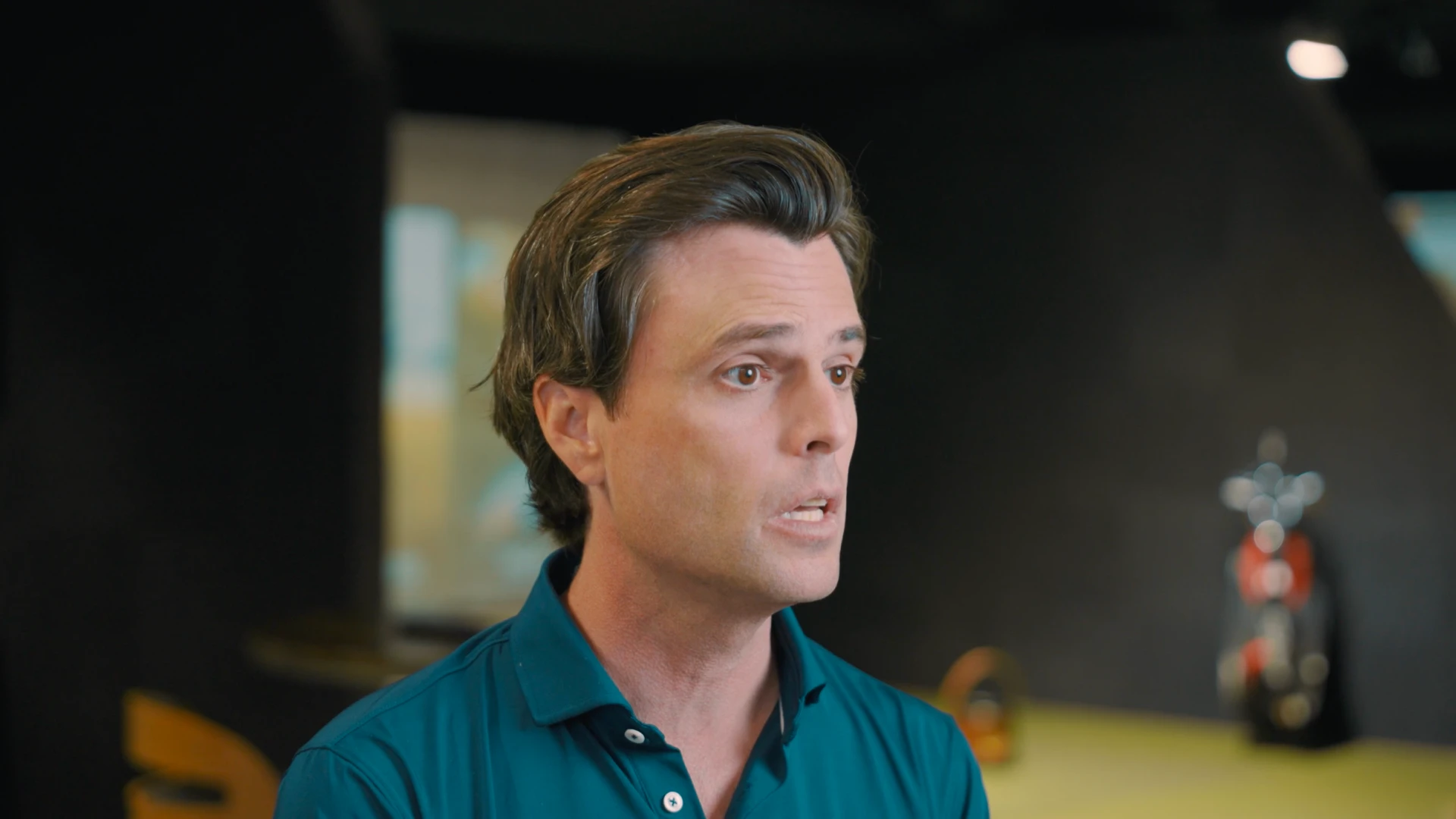
That same expertise provided a clear advantage when Buchanan moved from coaching into ownership. He was not approaching indoor golf solely as a commercial opportunity. He had a proven background in the game and could use that experience to shape what City Golf Club would become.
Helping juniors fall in love with golf
For another PGA of America Member, Travis Lynch, the path led to junior golf.
Lynch first fell in love with the game in his mid-20s, eventually taking a job at a golf course so he could afford to play more. That experience grew into a career, including a period running junior programs for Hank Haney Golf before starting his own academy, Travis Lynch Golf.
His guiding principle when coaching children is simple: make golf fun.
“The longer you can have fun and enjoy the game, that love will follow you through the hard times,” says Lynch.
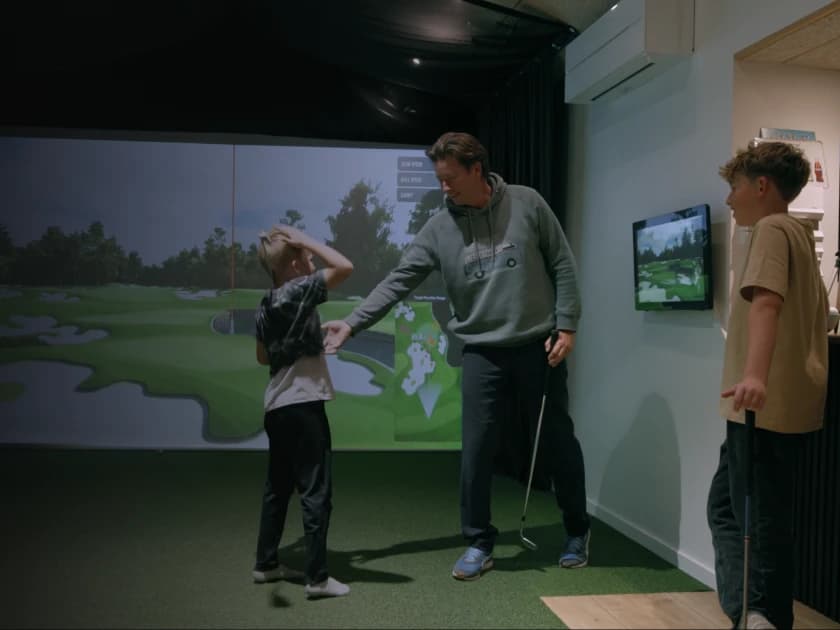
Technology can help create that engagement. Junior golfers have grown up around screens and instant feedback, making Trackman games, challenges and visual information a natural part of the learning environment.
Closest-to-the-pin challenges and performance games give young golfers a clear task and an immediate result. They can see whether they completed the challenge, measure their progress and try again. Indoor simulators also allow the learning to continue regardless of the weather, while virtual golf courses can provide experiences suited to junior players.
But Lynch stresses that technology must remain a communication tool rather than become the focus of the lesson.
“The most important piece of advice while teaching juniors with Trackman would just be: keep it simple,” he says. “Don't dive too deep into the numbers — diving too deep is just going to confuse a junior golfer. Identify the biggest flaw. Stick to the ball flight laws. Identify one, work on a drill, improve it, test it.”
The real reward is not the number on the screen. It is the moment a young golfer makes a breakthrough.
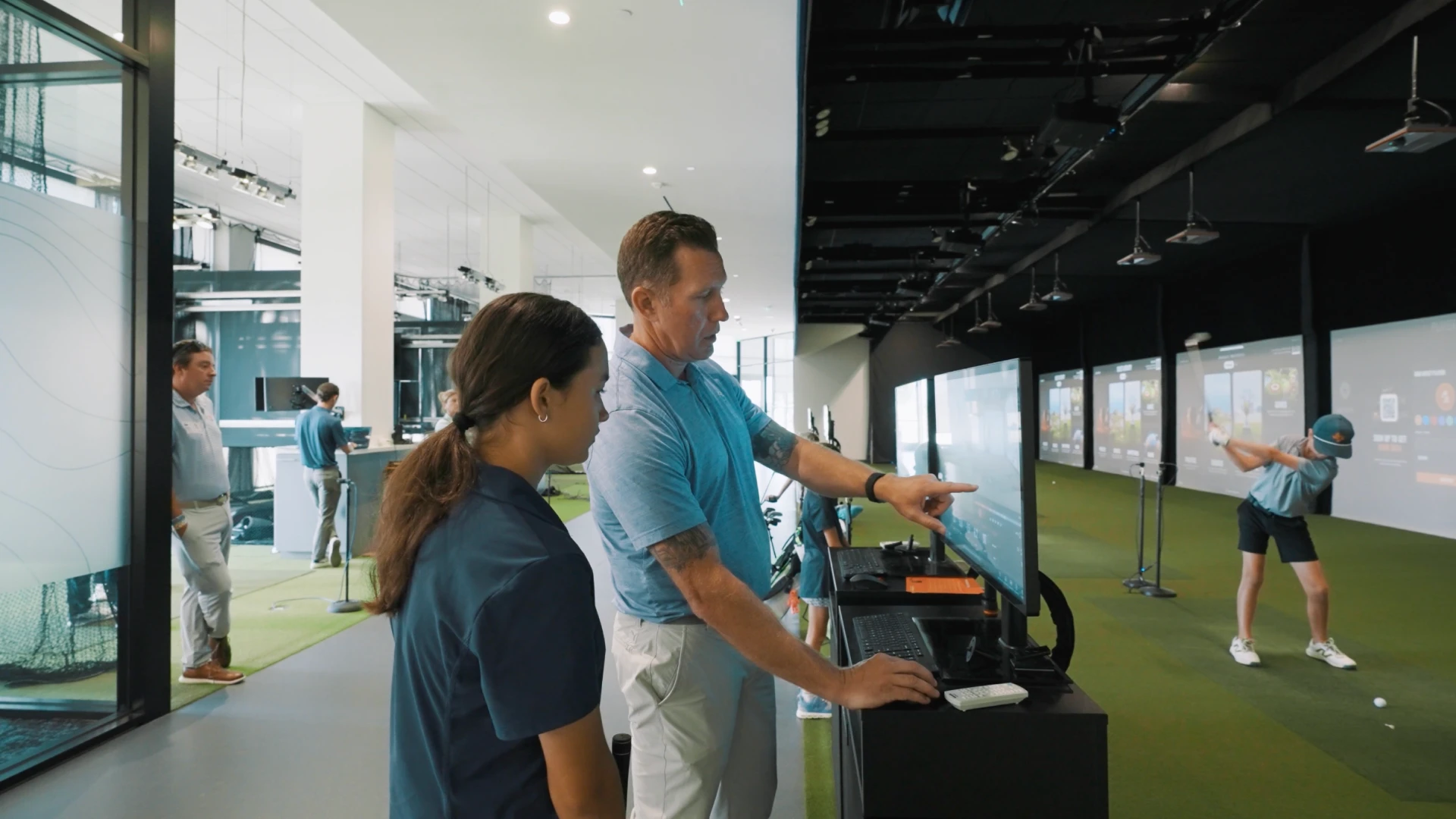
“The proudest moment would just be when they hit the ball the best that they can possibly hit it, and they haven't got that moment before, and they turn around and you get the eyeballs and a look that says: ‘Yes, I did that!’” says Lynch.
Some of Lynch’s students have gone on to play college golf. Others have returned to tell him they want to pursue careers in the game themselves. For a coach, that is impact measured far beyond the lesson tee.
Finding the margins with elite players
PGA of America Member Cameron McCormick’s coaching journey began after his own ambitions as a professional player did not unfold as planned.
After taking a job at a golf club, he discovered another side of the game. An experience of helping a golfer achieve something she had not been able to do before gave him a new sense of direction.
“Within the first two weeks, I teach my first lesson,” McCormick recalls. “I still remember the look on her face when I helped her do something she couldn't do. It was such a moment that filled me with joy. And that's what I wanted to do ever since.”
His first encounter with Trackman sparked the same kind of curiosity. For McCormick, the ability to measure the collision between club and ball represented a fundamental change in coaching.
“It was transformative for everyone involved, because it's an ability to measure something that happens in 10,000th of a second — that is the most critical thing,” he says.
That measurement helped move coaching away from guesswork. Instead of relying primarily on preferences, coaches could connect what the golfer was doing to the principles governing impact and ball flight.
As technology has evolved, that feedback loop has become broader and faster. Coaches can relate body motion to club movement, connect club delivery to ball flight and direct the player’s attention toward the factor most likely to produce improvement.
That becomes especially important at the highest level, where the differences between players can be extremely small.
“When you're working with elite players and the margins of separation are very small, one of the most important things you need to be doing is defining what are those rate limiters — and then you work backwards from there,” says McCormick.
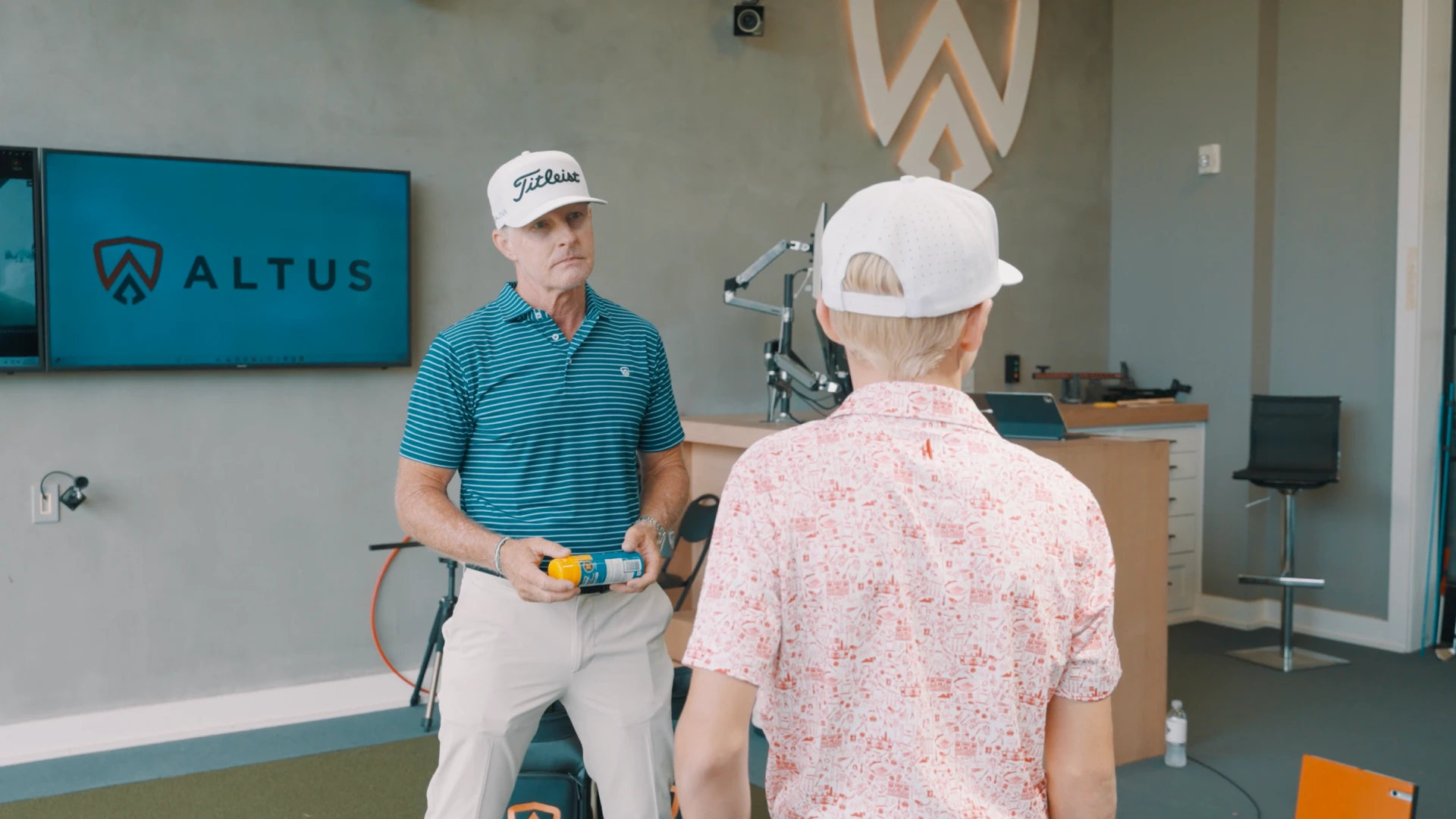
Objective information helps the coach identify those limiting factors and focus time where it can have the greatest effect. The technology does not replace coaching judgment. It gives that judgment a stronger foundation.
The art of coaching remains human
Technology will continue to play a larger role in golf. The next generation of PGA professionals is already entering the industry with more exposure to data, digital tools and new ways of learning than previous generations.
Hogge expects those capabilities to develop quickly, particularly as swing and ball-flight information becomes more closely connected with on-course performance and scoring analytics. The opportunity is to understand not only how a player moves or delivers the club, but which improvements will make the greatest difference to the way that individual actually plays.
Still, education is about more than a curriculum or a piece of technology. It is also about the knowledge shared between professionals, the conversations that happen outside the classroom and the experience passed from one coach to another.
“I think the strength of the PGA education isn't necessarily the curriculum — it's the fellowship you get with your fellow professionals,” says Hogge. “I learn just as much from the side conversations as I do from what's on stage.”
Trackman can measure the shot. Education can teach a coach how to understand it. But the lasting impact comes from knowing how to turn that understanding into the right message for the person standing in front of them.
“Being able to interpret that information and deliver it to a student in a language that makes sense to them — I think that's the art of coaching,” says Hogge.
Cusick welcomes groups from PGA of America headquarters to the Coaching Center around 30 weeks a year. During those visits, he makes a point of championing teaching and coaching as a career path with global opportunities.
“You can go anywhere in the world, set up shop and be a teacher,” concludes Cusick. “A golf professional should have the ability to teach the game of golf. That’s what we’re here to do — to grow the game.”
Frequently Asked Questions
What are the main PGA of America education pathways?
Future PGA of America Golf Professionals can develop through the PGA Professional Golf Management Associate Program or the PGA Golf Management University Program, which is offered at 16 accredited universities nationwide. Continuing education then supports PGA of America Members throughout their careers.
How does PGA of America education reflect the different careers available in golf?
PGA of America education reflects the growing diversity of careers across the golf industry by offering specialized pathways in areas such as teaching and coaching, golf operations and executive management. This allows aspiring PGA of America Golf Professionals to develop the expertise most relevant to their career ambitions.
How are PGA of America and Trackman helping develop golf coaches?
PGA of America provides the education and professional development coaches need to build their careers, while Trackman gives them objective data for understanding performance and measuring improvement. Together, education and technology help coaches turn complex information into clear, effective instruction.
How is Trackman used in golf coaching?
Trackman helps coaches measure ball flight, club delivery and player development. Coaches can establish performance baselines, identify the factors limiting improvement, monitor changes over time and use objective feedback to explain those changes to players.
Does Trackman replace the judgment of a golf coach?
No. Trackman provides objective information, but the coach must determine which data matters and how to apply it to the individual golfer. Technology strengthens coaching judgment rather than replacing it.
Can Trackman help beginners and junior golfers?
Yes. Beginners can accelerate their development by focusing on a small number of relevant parameters, while junior golfers can engage with games, challenges and immediate visual feedback. The key is to keep the information simple and appropriate for the player’s age and experience.
How does Trackman help coaches working with elite golfers?
At the elite level, Trackman helps coaches identify small performance differences that may be difficult to detect through observation alone. Objective data can reveal the factors limiting a player’s performance and help coaches focus their time on the changes most likely to produce meaningful improvement.