


How Tour players use Trackman to build feel
Rory McIlroy uses Trackman's face and path data to fine-tune his wedge shots and confirm his feel with precision.
 Brandon La Rosa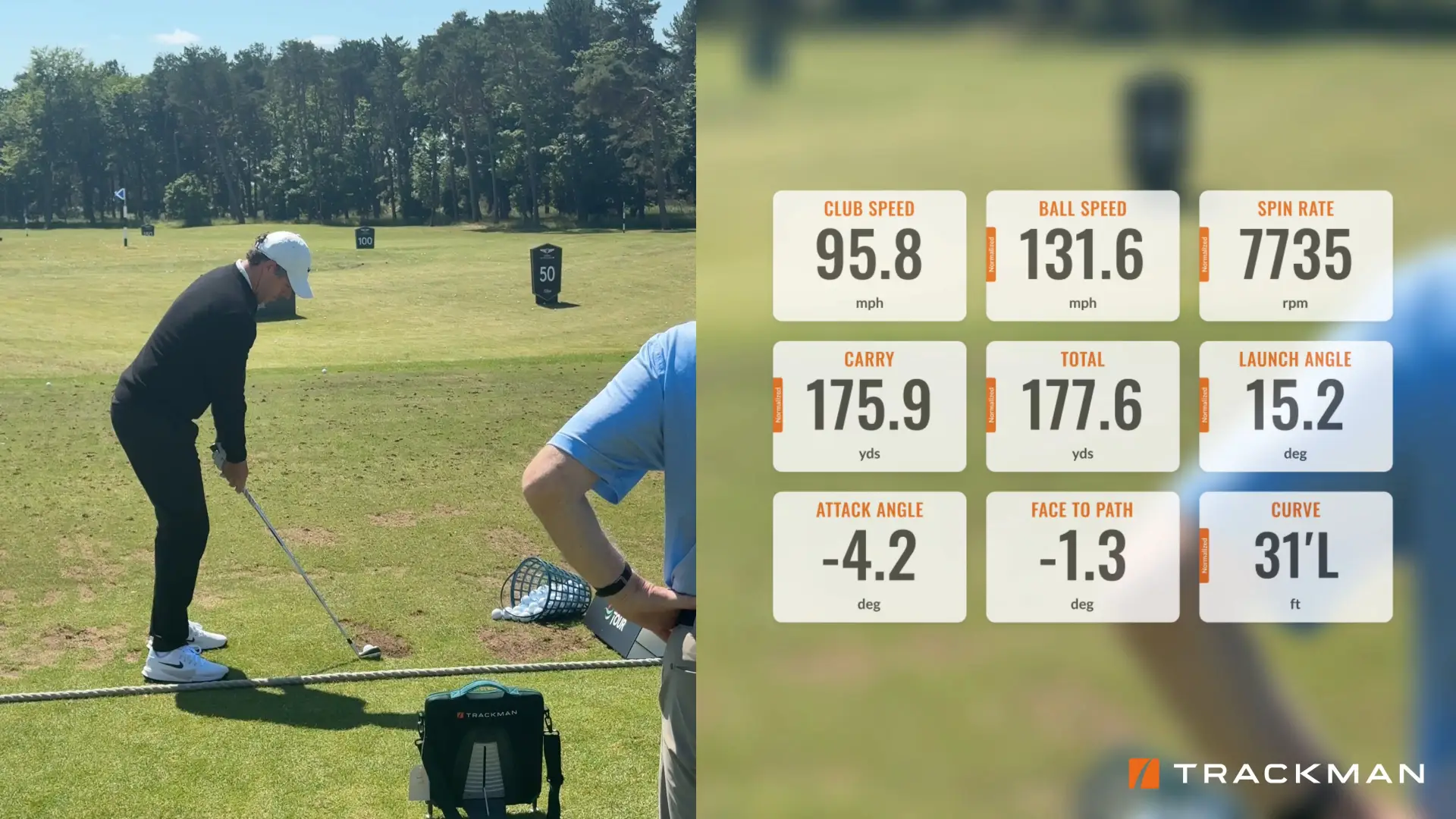
In a recent article on Golf.com, Rory McIlroy talked about using Trackman to “train your feels back into where they need to be.” That’s a good description of something I see every week on the PGA Tour.
The best players in the world aren’t using Trackman to replace feel. They’re using it to validate whether what they feel in their swing is reflected in the data — and to identify any subtle adjustments they may need to make.
For example, a functional draw may feature a club path of +2 to +5 degrees, with a face angle roughly half that value, such as a +4 path with a +2 face. A cut or fade follows the same principle in the opposite direction, using negative path and face values.
While preparing for the Open Championship, Rory was focused on face and path with his wedges. At times, his path can move too far to the right (more positive). He worked through those path numbers to bring them slightly more neutral and produce the ball flight he and his team wanted.
That’s where Trackman becomes so valuable: It provides objective confirmation that an intended change is actually occurring. Rather than guessing, players can measure.
When players can match their face and path numbers to the delivery window and shot shape they intend to see, it often leads to more confident, consistent golf.
The best in the world do this every week. Scottie Scheffler, Xander Schauffele, Rory — the list goes on of elite players who trust our product to help them better their game.
For the average golfer, I’d keep it simpler. Face angle and impact location are two of the most valuable places to start because they have a significant influence on ball flight.
If you can consistently deliver the clubface in a relatively neutral position to the target and strike the ball near the center of the face, you’ll put yourself in a strong position to hit more solid golf shots.
Over time, you begin connecting those numbers and results with what the swing actually feels like. That’s how data can help you build better feel.
Further reading: Top 8 ways to practice indoors with Trackman