



Trackman Talks: Build practice that transfers
Why better practice sessions don't always lead to better golf—and how to fix it
In coaching, one question keeps coming back: why does improvement on the range or in the sim so often fail to show up on the course?
In a recent Trackman Talks session, host Niklas Bergdahl was joined by Peter Arnott—Performance Coach and founder of Practice Thinkers—to explore exactly that. The conversation highlighted a critical shift in how coaches should think about practice, data, and performance.
What you'll get from this episode
Why practice improvements often fail to transfer
How to use data feedback without creating dependency
How to create representative practice
How to shift your mindset from searching for a swing to deploying what works
Watch the full episode
Trackman Talks: Build practice that transfers with Peter Arnott
When "perfect data" doesn't transfer
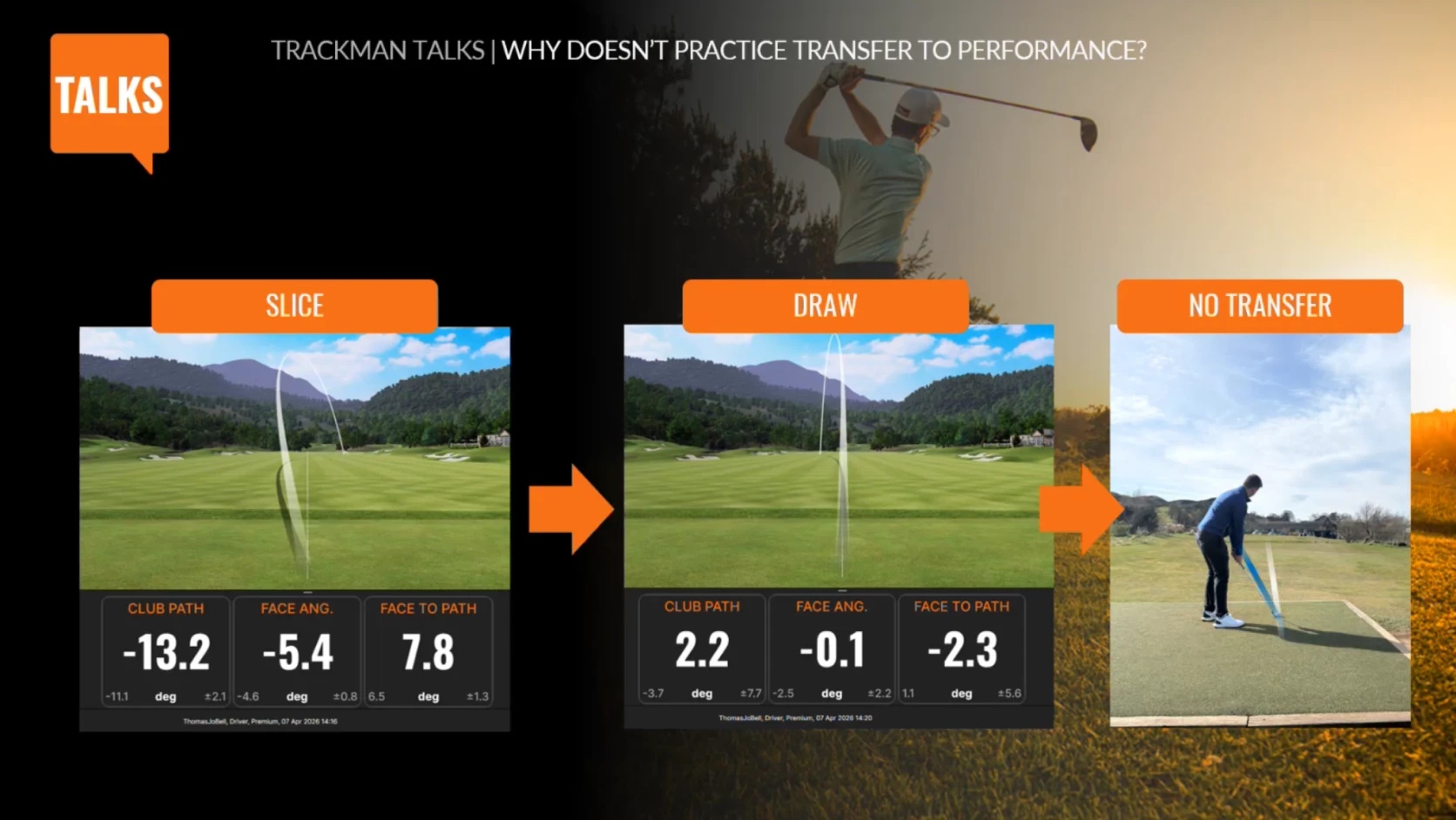
Peter opened with a story many coaches will recognize. A player with a 30-year slice spent an entire winter working indoors on Trackman. Over time, the numbers improved. Path moved from −10 to positive. Ball flight turned into tight draws. Everything looked correct.
Then spring arrived. First tee shot on the course: a slice.
What changed? Not the swing. Not the data. The environment.
The player had spent decades aiming left to compensate for the slice. Indoors, alignment was neutral. On the course, old habits returned. He was aiming 30 yards left—making a draw physically impossible.
“Trackman showed a perfect swing. But it couldn't show what the environment was doing before the swing even started.”

Peter Arnott
Performance Coach & Founder of Practice Thinkers
Data vs. learning: Timing matters
Trackman provides objective, high-precision feedback. That's its strength. But how and when that feedback is used determines whether learning actually happens.
On the golf course, players rely on ball flight, strike feel, sound, and visual feedback. That's the full feedback system. In practice, however, many players replace that system with a screen—they hit a shot, immediately look at data, and skip reflection entirely. Over time, this creates dependency. Players stop learning to interpret their own shots.
A simple shift that changes everything
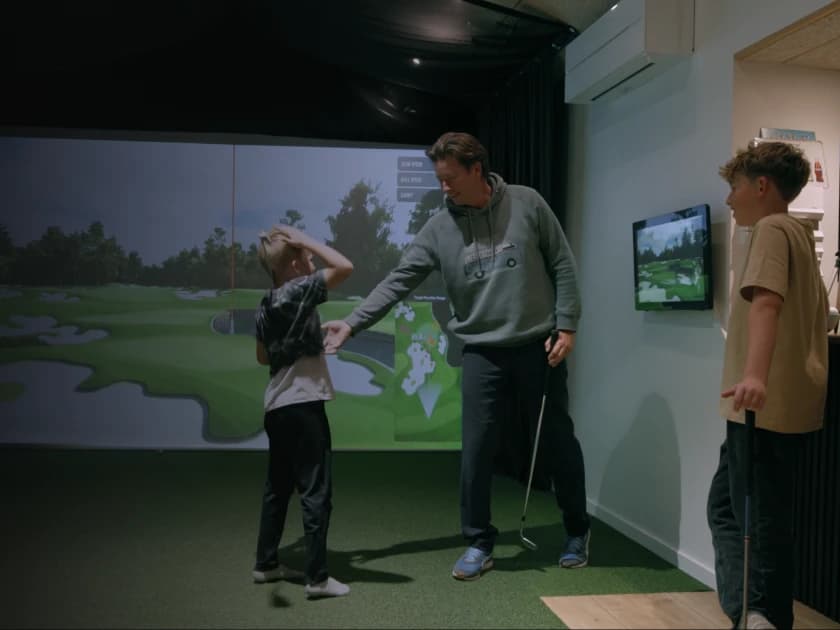
Peter suggests a straightforward intervention: turn the screen away. Have the player describe what they felt, predict the numbers, and explain the ball flight—then check Trackman together.
The method:
Player hits the shot and reflects on what they felt
Player predicts the key numbers before looking
Player explains what they saw in the ball flight
Coach and player review the data together
“The learner has to earn the answer.”
Peter Arnott
Performance Coach & Founder of Practice Thinkers
Golf is not a repetition sport
One of the most important concepts from the session: golf is a "between-skill" sport. Every shot is different—different club, different lie, different environment, different intention. But most practice looks like same club, same target, same distance. That's within-skill practice, and it doesn't reflect the game.
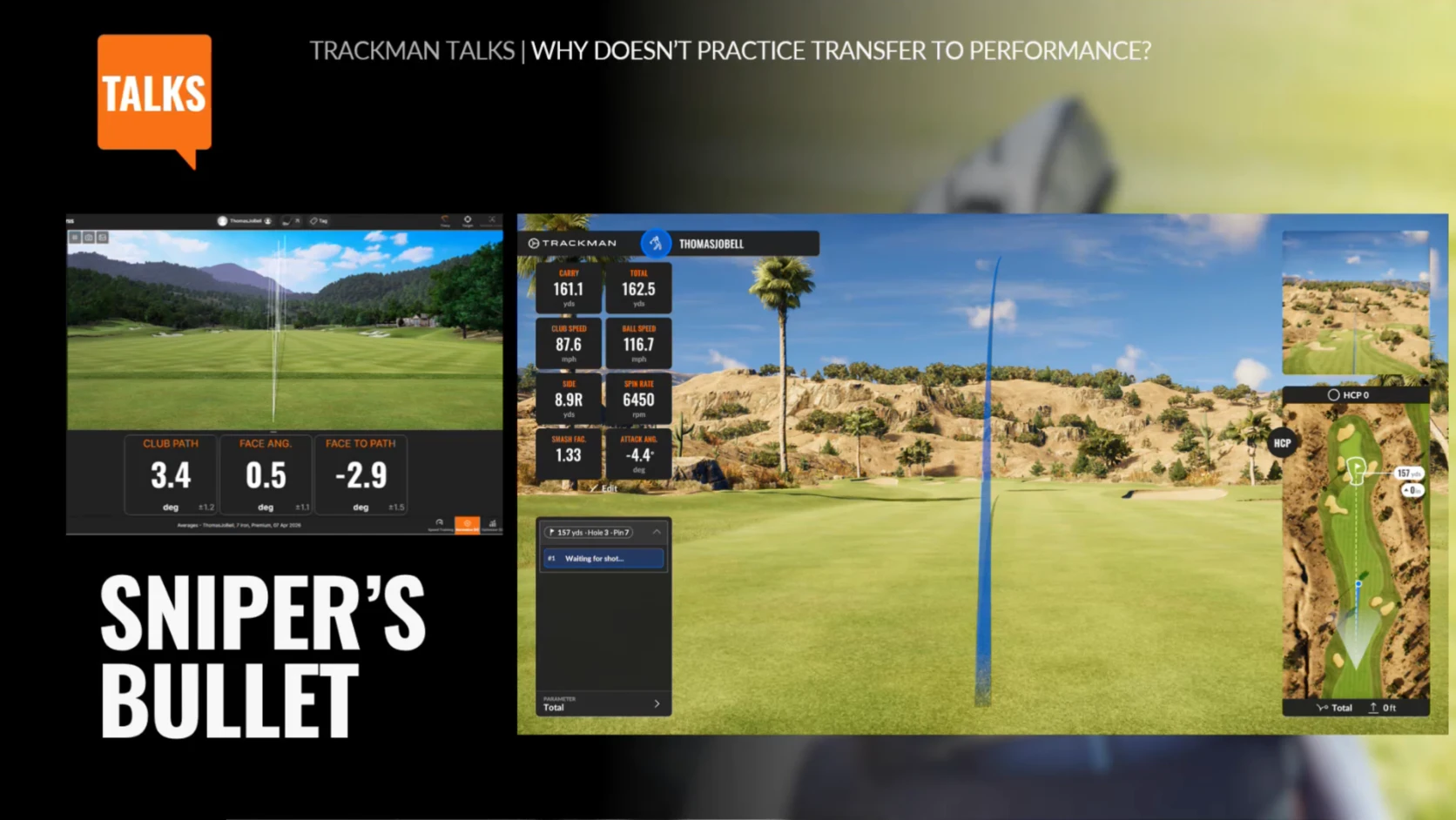
The sniper's bullet test
On the range, players often hit 30–50 balls to "find it." On the course, they get one shot. Peter calls this the test that reveals whether learning has truly transferred:
Can you execute the skill with one attempt, without buildup?
If yes—learning has transferred. If not—it hasn't.
Fundamentals of representative practice design
When data becomes a limitation
Trackman is the laboratory. The course is the proving ground.
Trackman gives players reliable stock numbers. But problems arise when those numbers become rigid. Peter refers to this as Trackmanitis—the tendency to pull the stock 7-iron for 165 metres automatically, ignoring wind, lie, slope, or pressure. The number becomes the decision instead of the starting point.
The solution to the transfer issue isn't less technology. It's better practice design. Representative practice—where training closely resembles the real game—is what drives transfer. That means changing targets, varying clubs, introducing consequences, and simulating on-course decisions.
Trackman plays a key role in all of this: as a measurement tool, as a simulation platform, and as a feedback system. But always within a broader context.
Stop searching for the perfect swing
Start deploying what you have instead.
This becomes especially important during tournament weeks. Many players approach competition still searching for a perfect swing—trying to fix weaknesses, chasing last week's feel. Peter suggests a different approach entirely: assess what's available this week, identify what's working right now using Performance Center, and then build strategy around that.
Less telling. More awareness.
One of the most powerful insights from the session came from coaching behavior. A player performed well in lessons but poorly alone—because the coach was guiding every decision. The player wasn't learning to think, only to follow.
The solution is to let the player speak first: define the shot, evaluate the outcome, and then invite the coach's input. The same applies to Trackman. Who reads the data first? Who interprets it? The tool is only as good as the self-awareness it builds.
“Build awareness. Enable performance. Then get out of the way.”
Peter Arnott
Performance Coach & Founder of Practice Thinkers
The takeaway
Trackman is one of the most powerful tools in golf. But data alone does not create skill. Performance comes from how practice is designed, when feedback is delivered, and how closely training reflects the game.
Peter said it best:
"Trackman shows you the truth. What you do with it—that is the coaching."
Key points:
Good data doesn't guarantee transfer—A player can fix their numbers indoors and still revert on the course. Environment, alignment, and habit exist outside what Trackman can measure.
Feedback timing shapes learning—Looking at the screen immediately after every shot builds dependency. Players learn more when they predict and reflect first, then check the data.
Most practice doesn't resemble the game—Hitting the same club to the same target repeatedly is within-skill practice. Golf requires adapting to a new situation every shot.
Deploy what works, don't search for perfect—Especially during competition, the goal isn't to fix the swing. It's to identify what's available and build a strategy around that.
Explore more
For more coaching tools from Peter Arnott, visit Practice Thinkers or discover new learning modules and certifications on Trackman University.
Stay up to date on the Trackman Blog for more golf insights and episodes of Trackman Talks.
Further reading: Trackman Talks: Turning data into smarter practice