



3D Motion Analysis: Unlocking the body–ball connection
See it in 3D, coach it simply, and let the ball prove you right.
 Trackman Editorial Team
Every coach has been there — the swing looks one way, the ball flies another. Players talk about feel. Coaches talk about cause and effect. But in the gap between those two lives the mystery: what really happened?
That’s where 3D Motion Analysis comes in.
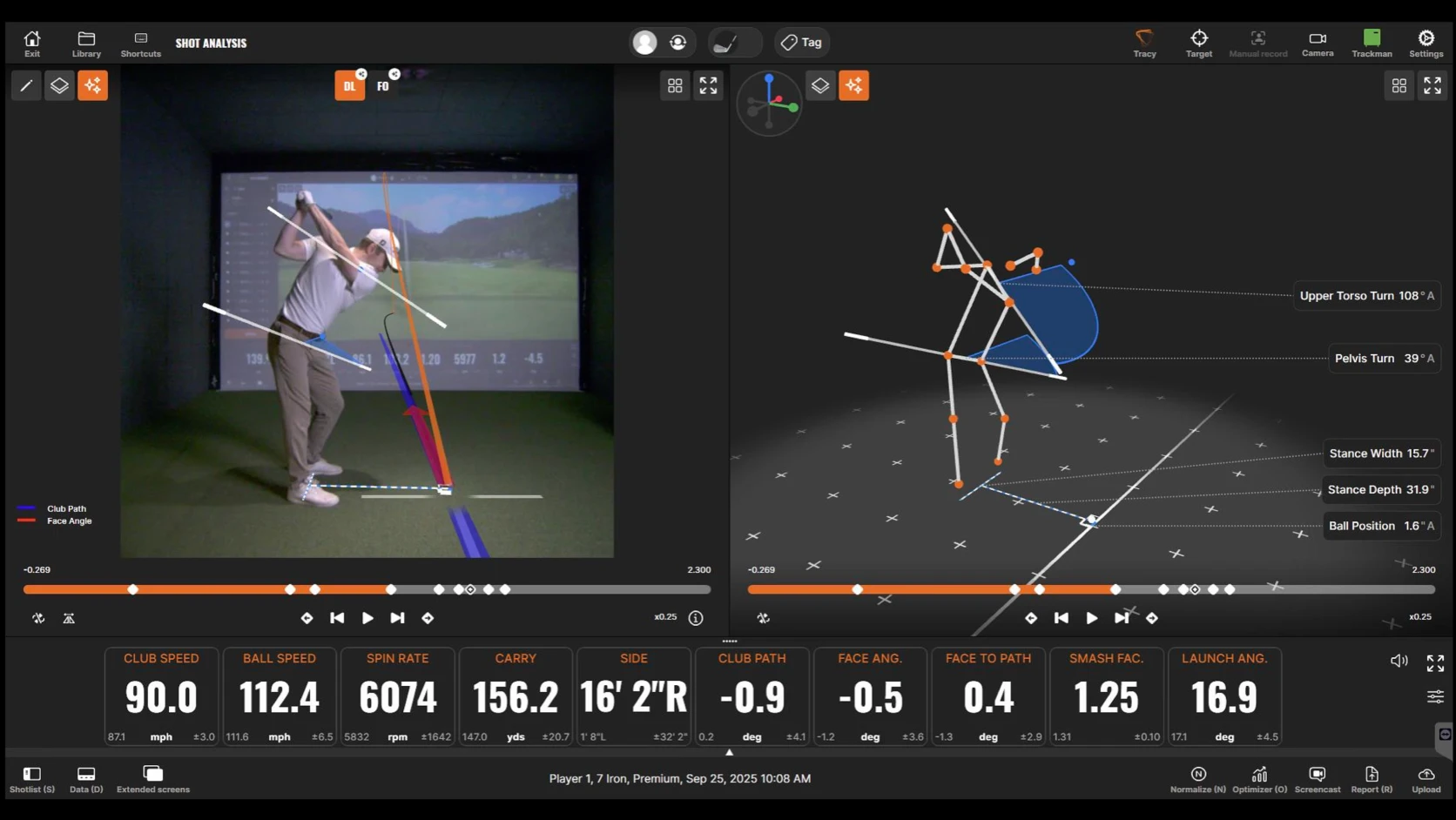
Now built into Trackman Performance Studio, this tool connects the dots from body to club to ball — so you can stop guessing and start coaching with data-backed confidence.
Here’s how it works, why it matters, and what it means for your players.
Track what matters, not just what moves
3D Motion Analysis tracks how the body translates (moves linearly) and rotates (moves angularly) during the swing. You get a clear view of how the pelvis and torso organize, how posture evolves, and how energy flows — or fails to.
It shows you the full chain: Body → Club → Ball
So when a shot balloons right or bleeds speed, you don’t just suspect poor sequencing — you see it. Maybe the torso lagged behind the pelvis. Maybe the arms jumped the gun. Either way, you know what happened and when. And that makes finding an effective fix much easier.
Fredrik Tuxen, Trackman Co-founder and CTO, tells the story of 3D Motion Analysis below.
A simple frame for coaching movement
Biomechanics can sound complex, but it’s easier when you zoom out. Use this three-part lens:
Structure: Setup and alignment at address
Function: How the body organizes to deliver the club
Motion: How segments move through space and time
Great sequencing starts from the ground and moves up — pelvis, torso, arms, club. When that sequence flows, players gain speed, tighten dispersion, and strike it clean. When it breaks? The ball flight shows it. The 3D data confirms it. And now, your fix can be small, specific, and rooted in reality.
From data to action — fast
Numbers don’t coach. You do.
Use 3D Motion Analysis to pick one cue that your player can actually use under pressure. Two cue types help different learners:
Internal (body-focused): “Fire your hips earlier”
External (task-focused): “Brush the turf after the ball”
Find the first fault in the sequence. Choose the cue that targets it with the least disruption. Then validate the change with both motion data and ball flight.
Simple rule: One fix. Two confirmations.
Not just new graphs — a better process
This isn’t just more information. It’s a coaching system.
3D Motion Analysis brings full-body tracking into TPS — alongside the club and ball metrics you already trust. And with Trackman University's Biomechanics, you get the knowledge to use it well.
The result?
Shorter diagnosis time
Smarter lessons
Faster progress
Higher player buy-in
It’s a clear, measurable way to link body motion to ball flight — and to help your players improve with less trial and error.
Your 4-step coaching flow
See it. Coach it. Prove it. Lock it in.
Start with the ball. What needs to change — start line, curve, peak height?
Work backward. Find the first breakdown in posture or sequencing.
Pick one cue. Internal or external — just make it actionable.
Validate, then vary. Confirm with 3D and ball flight, then add variety (different clubs, speeds, lies) to make it stick.
What players will notice
Tighter start lines and more predictable shapes
Better speed without swinging harder
Consistent contact and trajectory across clubs
The bottom line: fewer compensations and more repeatable results.
Next steps
3D Motion Analysis bridges biomechanics and performance. For coaches, it clarifies cause and effect. For players, it makes progress feel simple and real.
Want to go deeper?
Start with Biomechanics at Trackman University — and take your coaching to the next level.